
Surf's Up Review
Overall
- Gameplay loop
- 9/10
- Writing, Story, and Lore
- -
- Art Direction
- 7.5/10
- Audio Design
- 7/10
- User Interface, Player experience, and Social Systems
- 6.3/10
- Performance
- 8/10
- Price and Value
- 9.5/10
Preface
Surf’s Up is leading up to a big update that should drastically change the game. Mark, the developer, has not confirmed a date yet, but he has been grinding away at it. Version 2.0 is set to bring a completely overhauled UI, new netcode, and an improved character controller. When that update drops, expect this review to be updated too.
Gameplay Loop
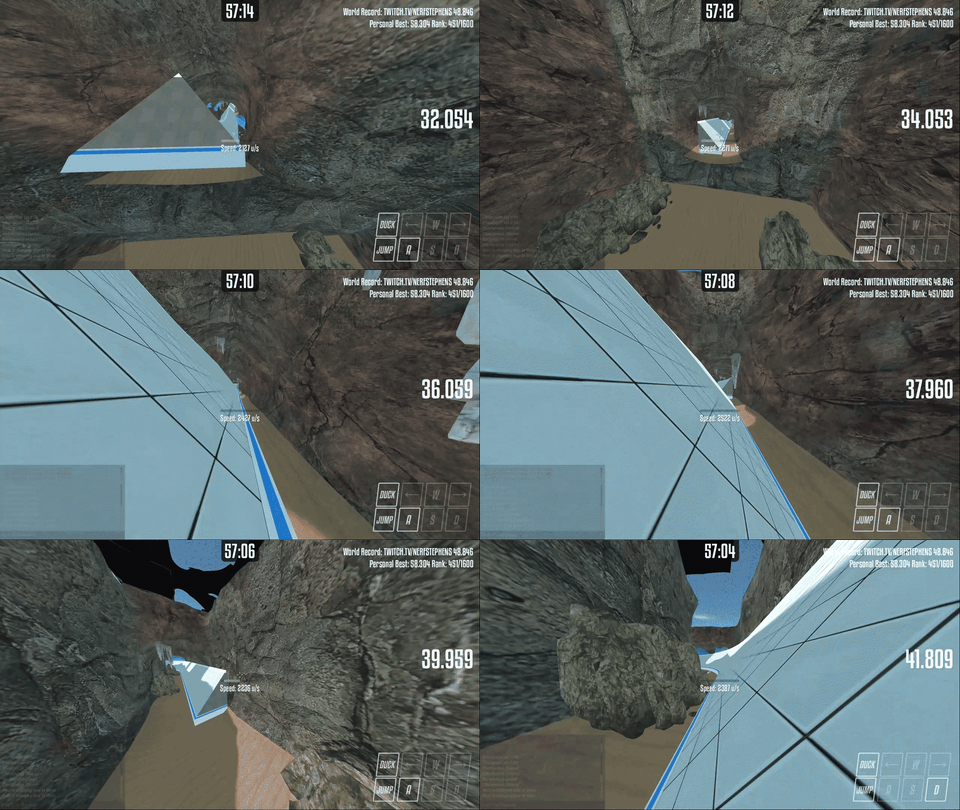
Surf’s Up is a game of meditative repetition, trying to complete levels, called maps, as fast as possible. It feels satisfying because you are honing a skill and refining it over repeated runs. Every time you load into a map, you gain a deeper understanding of how to shave time off your route.
For competitive players, there is a leaderboard to chase, and you can watch replays from other players to see how they pulled off their times. That is one of the game’s biggest strengths. You are not just competing with others, you are learning from them and stealing techniques for your own arsenal.
There are also several game modes beyond standard surf for players who want a different flavor of movement challenge: Surf, Bhop, Climb (KZ), and Long Jump. Regardless of the mode, the core goal is self-improvement above all else.
Mark also shared that version 2.0 is planned to include an improved character controller. If that lands as intended, there is a good chance the already satisfying movement will feel even better.
The game features a ranking system that places you from Novice to Legendary depending on where your time lands on a specific map. The ratings are as follows:
- Top 1% - Legendary
- Top 10% - Grand Master
- Top 25% - Master
- Top 50% - Intermediate
- 51-100% - Novice
Writing, Story, and Lore
This category is not really applicable to this kind of game, so I have omitted it from the score. If you need a story to stay invested, you are not going to find much of one here. That said, if someone asked Mark to make a campaign mode, I honestly would not put it past him to try.
Art Direction
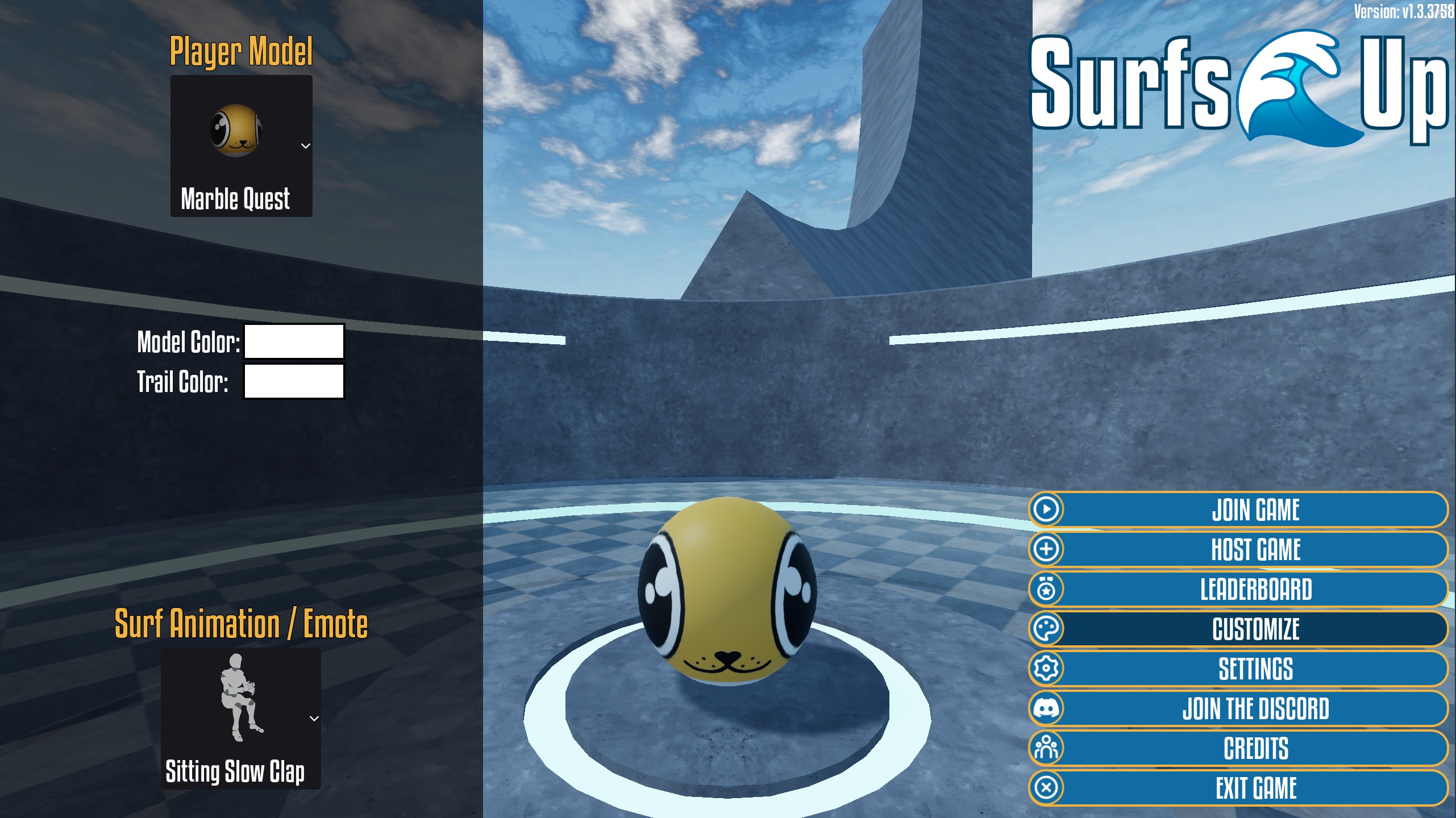
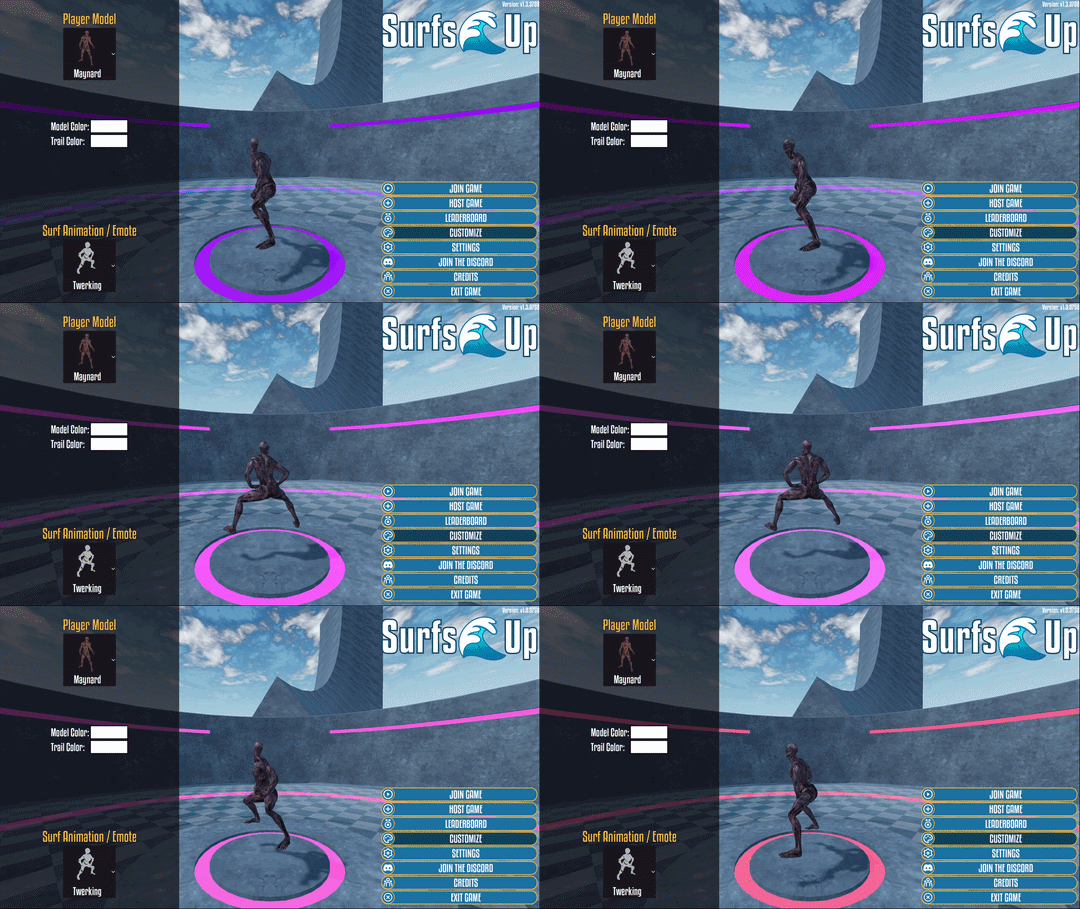
The game has a handful of skins you can unlock, along with some fun crossover extras from other indie games. The options range from familiar Mixamo characters to a Bloodthief Knight from Bloodthief, or even a marble from Marble Quest. The humanoid characters also have a bunch of emotes you can unlock for them, including, yes, twerking.
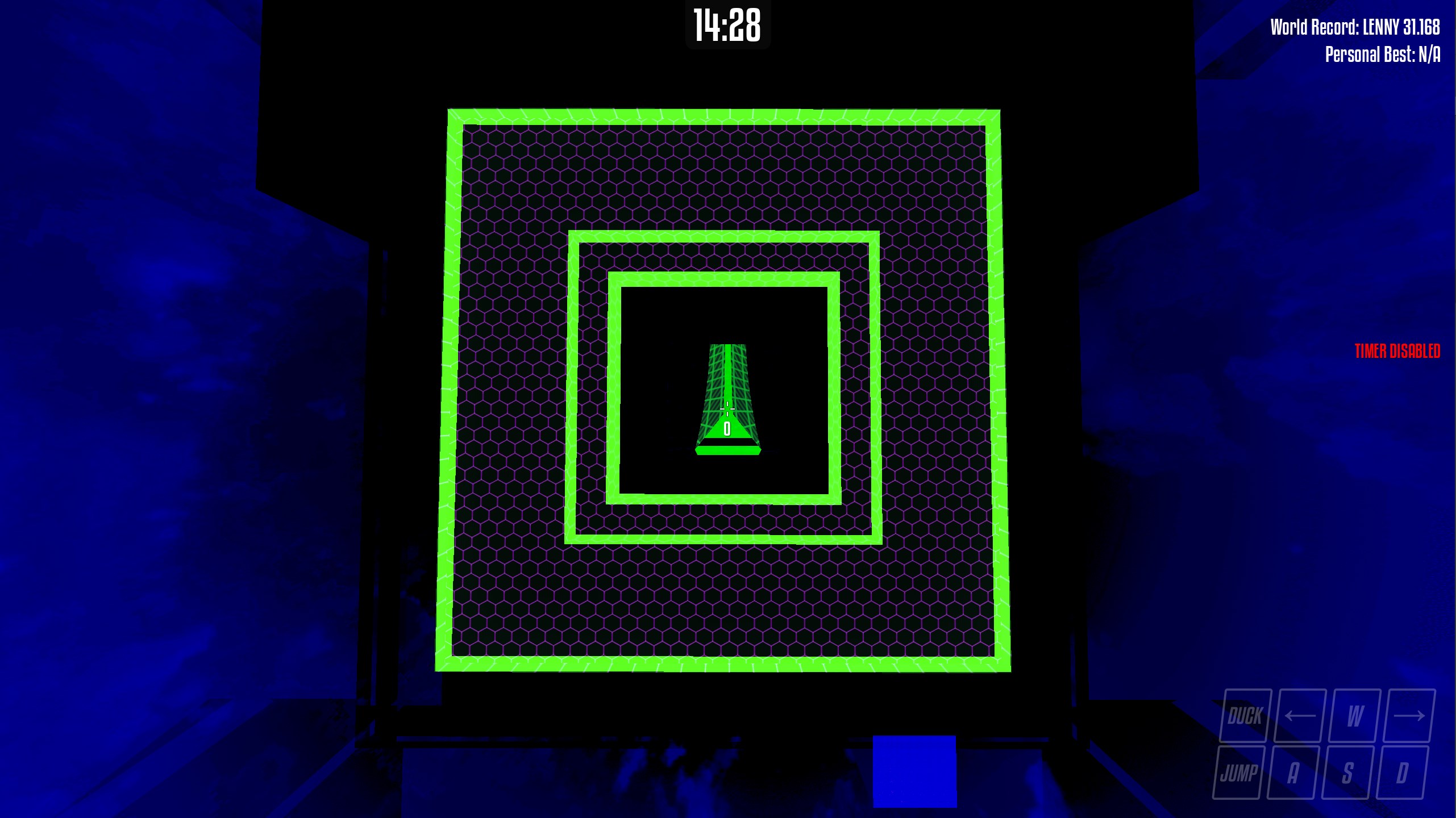
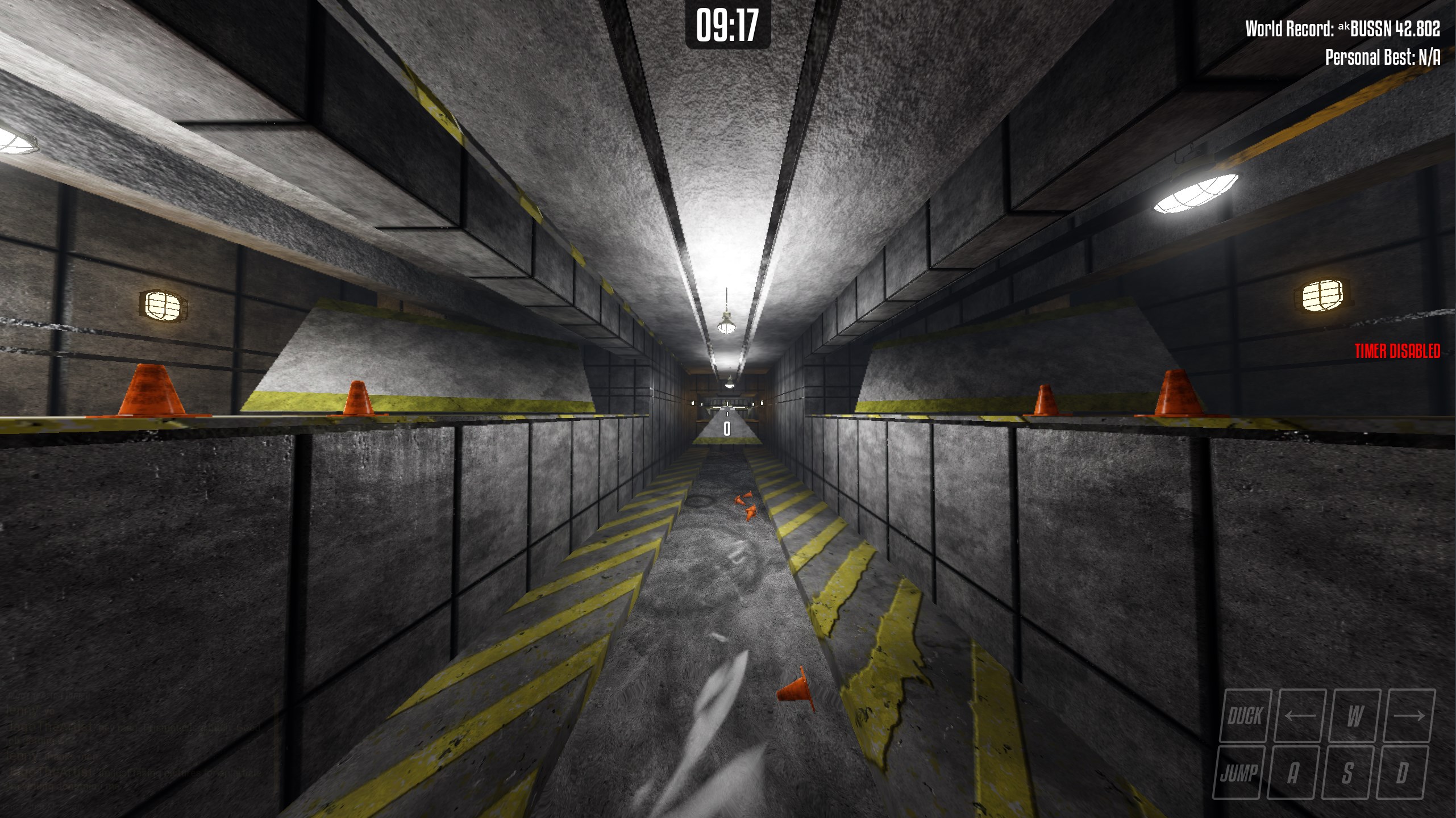
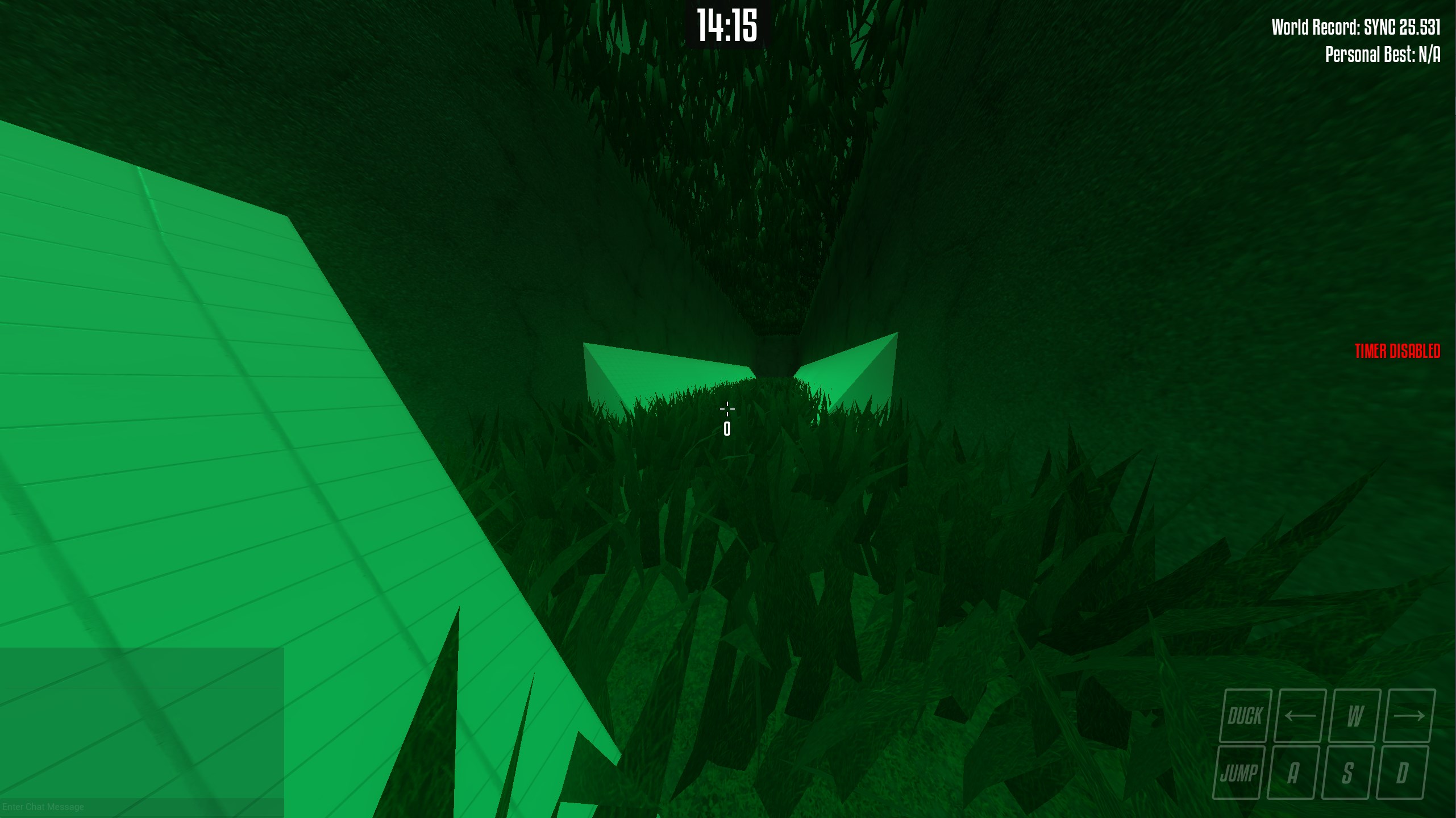
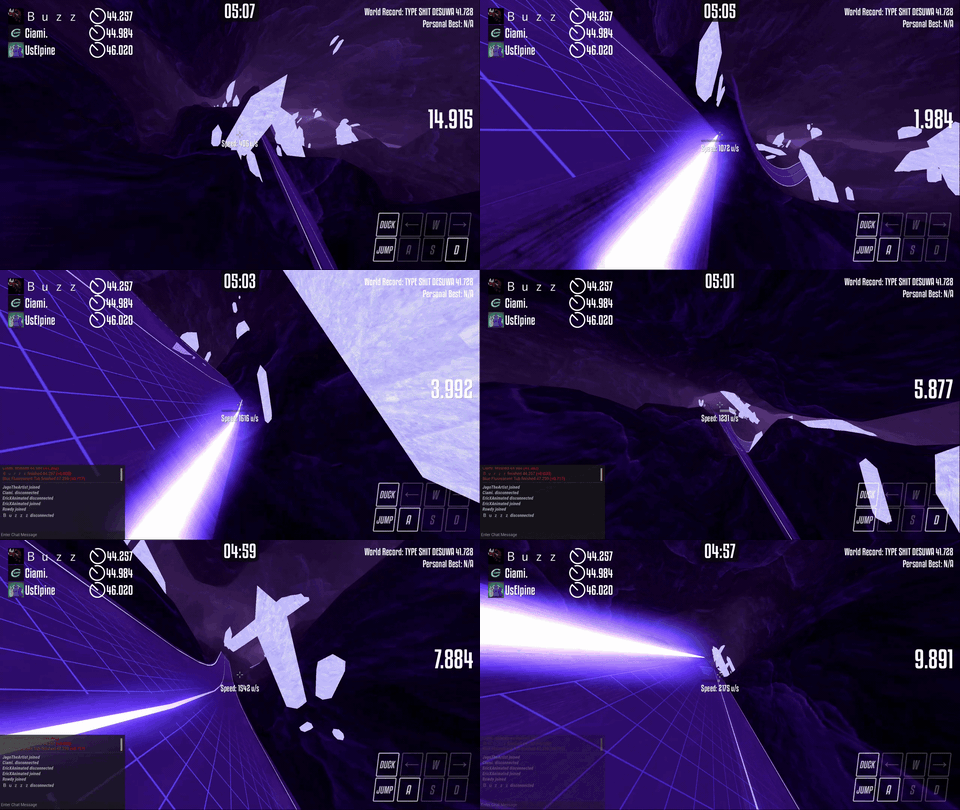
The game is essentially a hub for a huge range of community-made maps, which means there is no single locked-in art direction. Normally that could make a game feel visually inconsistent, but here I actually think it works in its favor.
That freedom gives map makers room to get weird with it, and the result is a ton of brilliant, mind-bending spaces with their own distinct aesthetics. Some maps are clean and minimal, others are surreal, and some look like they were built specifically to make your brain short-circuit in the best way possible.
So while Surf’s Up may not have one unified visual identity in the traditional sense, it makes up for that with variety and creativity. The artistic appeal comes less from a single house style and more from the sheer range of cool stuff the community keeps building.
Audio Design
The game does have some sound effects worth mentioning. On startup you get the Surf’s Up battle cry, and while moving around you can hear your footsteps. Some maps even have specific sound design tied to them. One of the most charming examples is a skateboard-inspired map that plays skateboard sounds whenever you ride walls, and each jump cracks like an ollie. That is a very cute bit of design, and it shows off what the Surf’s Up SDK can enable.
The music in the game is community-made, and there are several straight-up bangers I have listened to for hours while grinding maps. A lot of players mute the in-game music and play their own, which is perfectly fair, but I still think it is cool that the community is such an integral part of the game’s audio identity.
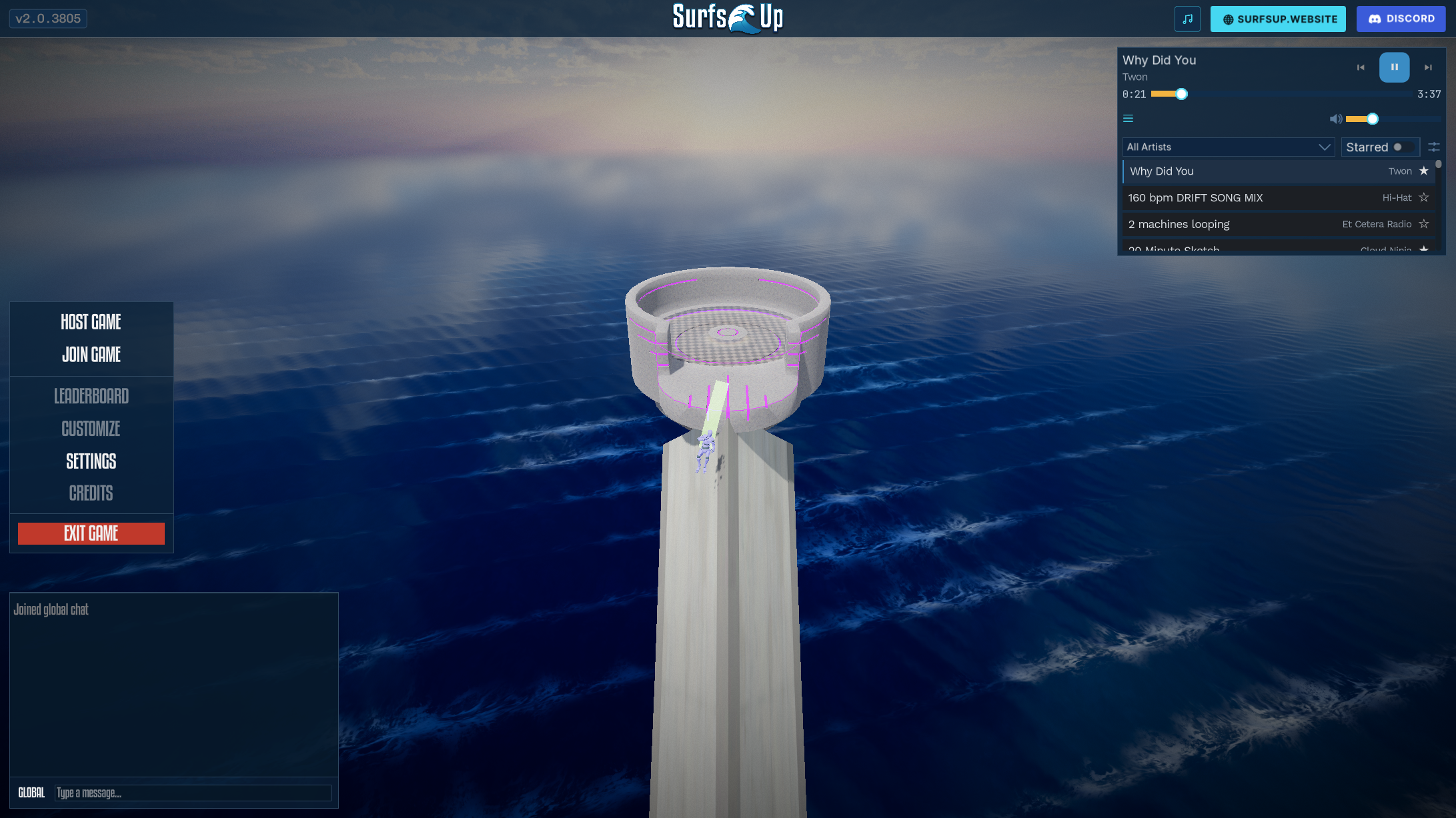
All of the game’s music was made by members of the community, which makes that whole system even cooler. Mark also shared that Surf’s Up 2.0 is planned to include a music player that shows who made the current song and links directly to the profiles they provided. He shared with me an early work-in-progress screenshot of that feature, and it also gives a small peek at some of the 2.0 UI.
User Interface, Player Experience, and Social Systems
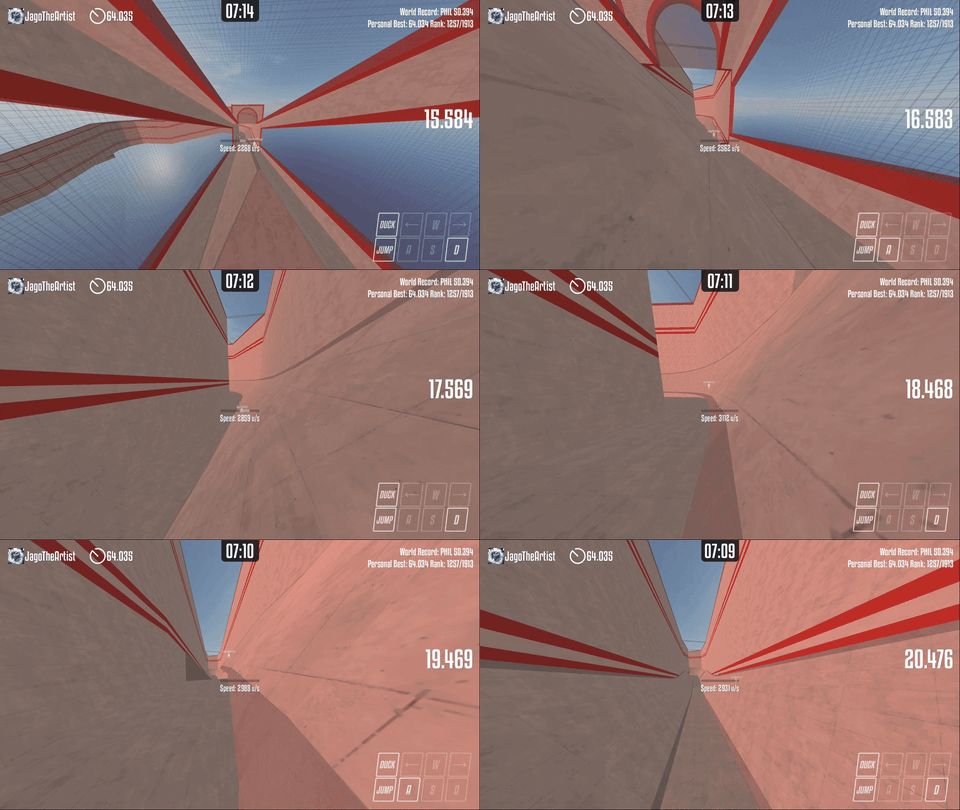
The user interface is serviceable, but it falls short in a few ways. Once you understand the layout it is easy enough to navigate, but for new players it can be unintuitive, especially when trying to sort through the massive and still-growing collection of maps.
Some actions also feel more awkward than they need to. For example, it is strange that you can download a replay through the pause menu, but then need to unpause and press tab just to find the “play replay” button. Little things like that are not deal-breakers, but they do make the experience feel rougher than it should.
That said, this section is also one of the biggest spots where version 2.0 may change the conversation. Mark told me the UI is being completely overhauled, so this could end up being one of the most improved parts of the game once that update is live.
Performance
I have had no real issues in private lobbies, though other players have reported problems on different setups. One thing in Mark’s favor is that he tends to move quickly when performance issues are brought to his attention.
Mark also told me that version 2.0 is planned to bring new netcode. If that pans out well, it could help smooth over some of the issues players have reported and make the online experience more consistent.
My own system specs are listed on my about page.
Price and Value
The game is free to start with, but it also has a supporter pack that unlocks a few extra features. The free version includes a rotating map pool to keep things fresh, while iconic maps like Utopia, Boreas, Summit, and Mesa are always available. That means you can still practice on classic maps that helped define the genre without paying a cent.
If you do spend the extra ten dollars on the supporter bundle, it unlocks all maps, custom lobbies, unique cosmetics, and helps support the future of the game’s development.
If you do not want to buy that for everyone in your friend group, the good news is only the host needs the supporter bundle. Another point in the game’s favor is that even though I own the bundle, I have still spent plenty of time joining other people’s lobbies. It has been a great way to meet people and discover maps I probably would have ignored otherwise.
It is hard to beat the value here, with or without the supporter bundle.
Improvements
- UI improvements like the ones I mentioned earlier.
- More gamemodes (rocket jump?)
- Map themes. For people who like certain aesthetics, it could be interesting if they could force a map into a specific style. Running everything with a kitsune aesthetic would be funny as hell, even if it would probably need a brute-force texture replacement approach and would not be as polished as a hand-made map.
- The netcode is generally fine, but on Wi-Fi I get occasional big stutter skips. I almost never use Wi-Fi, but when I had to recently it would jitter about once an hour. If there were some way to semi-pause the run and count you back in, it might save runs that otherwise die to lag. That is obviously a hard problem to solve cleanly.
- I mentioned this more as a joke earlier, but a Surf’s Up campaign DLC would be hilarious, not gonna lie.
Final Thoughts
Surf’s Up has so much heart, from the developer to the community surrounding it. If you like honing a skill, competing against friends and strangers alike, or even just want the smooth meditative experience of surf without needing to download a ninety-gigabyte game first, then Surf’s Up is for you.